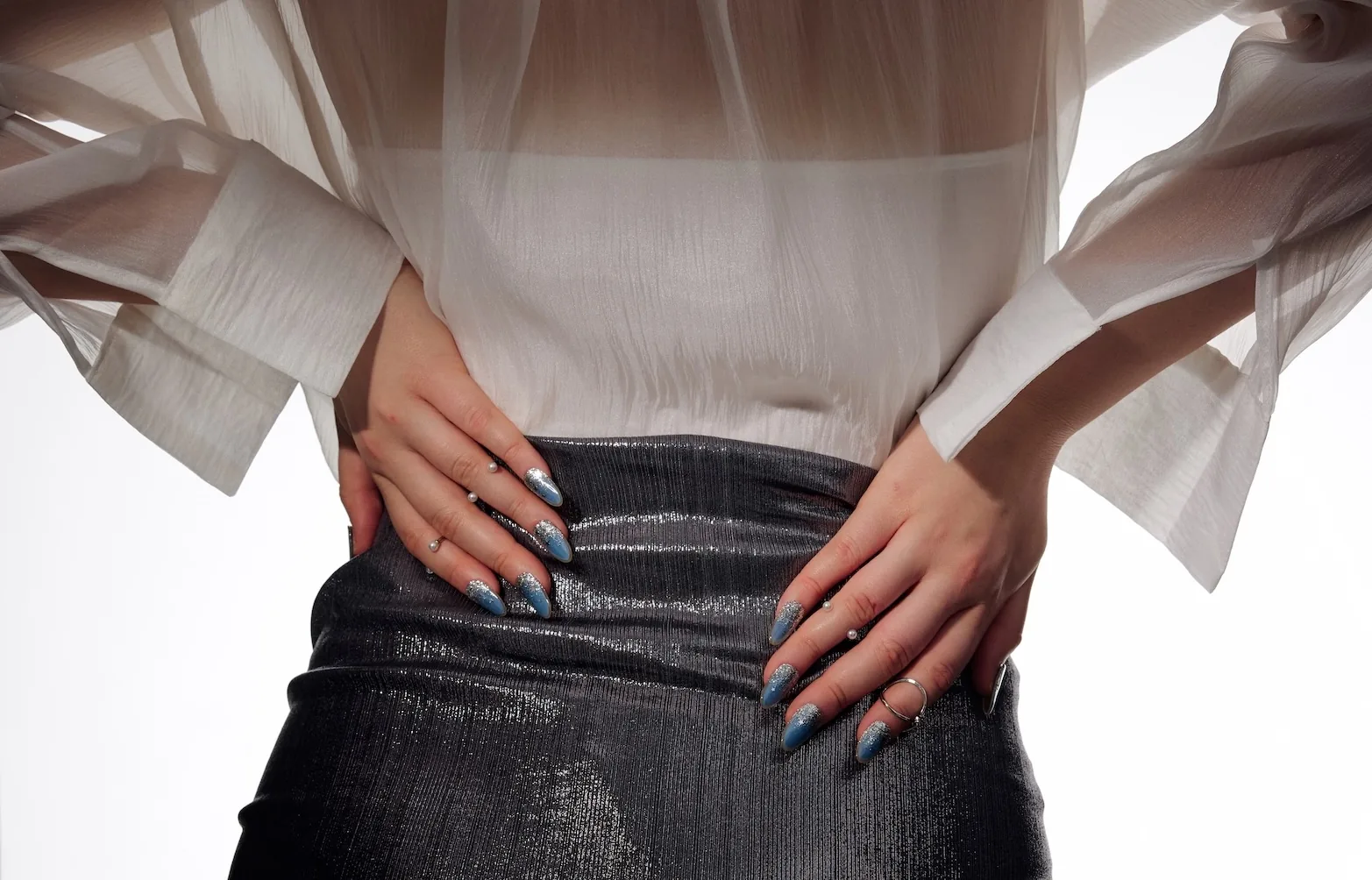
Nude, red, burgundy: which shade for your skin?
The same color does not say the same thing on every hand. Here are the pointers for finding the ones that suit you, without spending the afternoon on it.
First, find your undertone
Skin tone is how light or dark the skin is. Undertone is its temperature, and it is the undertone that decides whether a color brightens you or dulls you.
Two tests, in daylight. Look at the veins of your wrist: if they are rather blue, your undertone is cool; rather green, it is warm; in between, it is neutral. Then jewelry: if gold suits you better, you are warm; if silver does, cool.
Nude: never exactly your skin
A successful nude is not the color of the hand: it is half a tone lighter, for a fresh effect, or half a tone darker, for a dressed effect. Exactly the color of the skin, it erases the nail.
- Very fair or fair skin: rosy beiges, powder pinks.
- Golden skin: peach, apricot, light caramel.
- Olive skin: caramel, hazelnut, antique rose.
- Brown or ebony skin: cocoa, café au lait, or on the contrary a light beige for contrast.
Red: there is one for everyone
Reds fall into two families. Those that lean toward blue, cherry or raspberry, flatter cool undertones. Those that lean toward orange, poppy or brick, warm up warm undertones.
And burgundy? It is the most diplomatic: deep enough for every skin tone, it suits almost everyone.
Darks and pastels
Midnight, plum, emerald: on fair skin, they create a clean, very graphic contrast; on dark skin, they play on depth, tone on tone.
Pastels glow on golden, olive and dark skin. On very fair skin, choose them a little stronger: too pale, they make it look dull.
The surest way: try
These pointers give a direction; the proof is on the hand. Our color advice suggests five shades according to your skin tone, your style and the occasion — and, on our nails, you can change them in a few seconds.
By Opaliance ·